
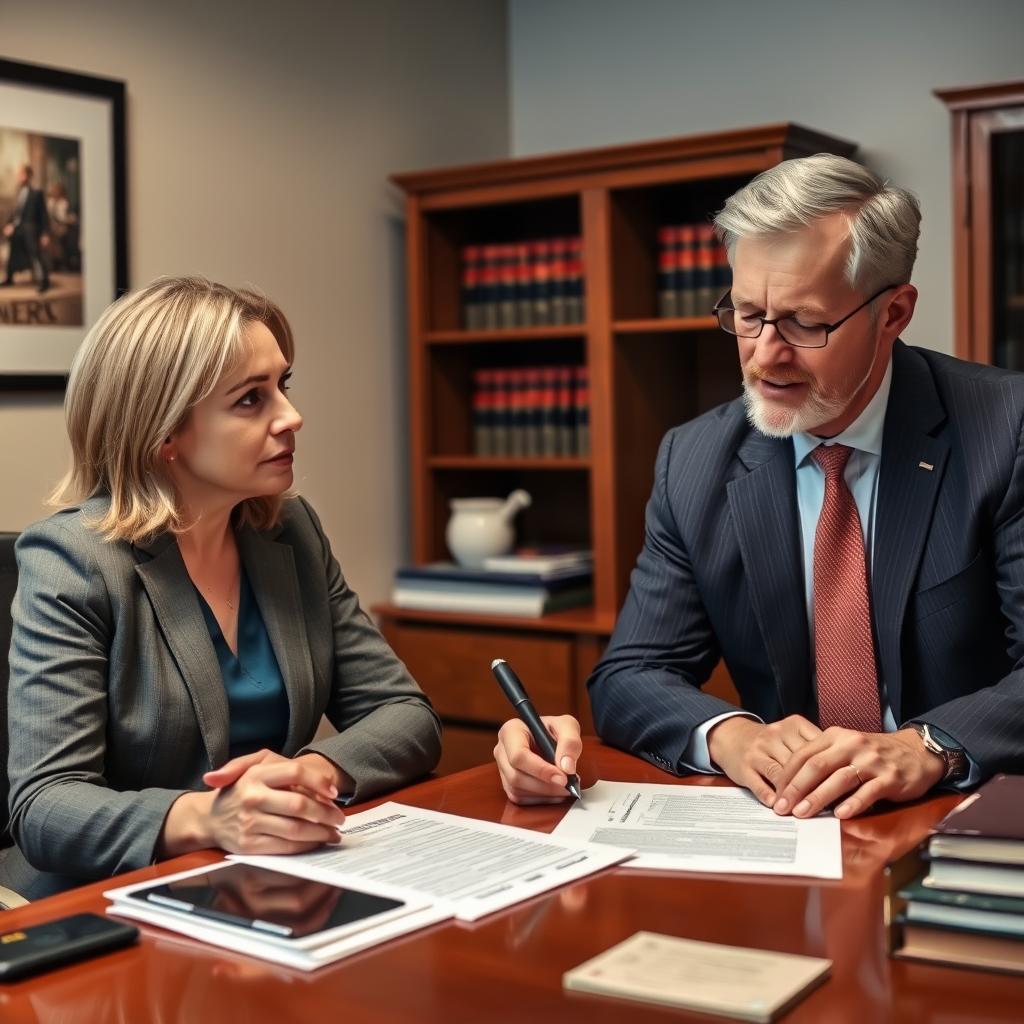
Foundation Planning Lawyer Fluvanna County
You need a Foundation Planning Lawyer Fluvanna County to establish a private charitable foundation under Virginia law. This process involves drafting articles of incorporation, filing with the State Corporation Commission, and applying for 501(c)(3) status with the IRS. Law Offices Of SRIS, P.C.—Advocacy Without Borders. provides this legal service from our Virginia Location. (Confirmed by SRIS, P.C.)
Statutory Definition of a Virginia Private Foundation
Virginia Code § 13.1-801 et seq. governs the formation of nonstock corporations, which includes private foundations, classifying them as entities organized for charitable purposes with specific operational restrictions and tax obligations. The foundational legal structure for a charitable entity in Fluvanna County is a nonstock corporation filed under Title 13.1 of the Virginia Code. This statute outlines the mandatory provisions for articles of incorporation, including the charitable purpose statement and the declaration that the corporation is organized exclusively for purposes described in IRS Code Section 501(c)(3). Failure to adhere to these statutory requirements can result in the SCC rejecting the filing or the IRS denying tax-exempt status, which defeats the core purpose of the foundation. The statute also mandates specific internal governance rules, such as the distribution of assets upon dissolution, which must be for another 501(c)(3) organization or governmental purpose.
What legal documents are required to start a foundation in Fluvanna County?
You must file Articles of Incorporation with the Virginia State Corporation Commission. This document must include the foundation’s name, registered agent in Virginia, specific charitable purpose clause, and a dissolution clause directing assets to another charitable entity. The registered agent must have a physical address in Virginia, which SRIS, P.C. can provide through our Virginia Location. Following state approval, you must draft corporate bylaws to govern internal operations. These bylaws establish director roles, meeting procedures, and conflict of interest policies required by the IRS.
How does Virginia law define a foundation’s charitable purpose?
Virginia law requires the purpose to be exclusively charitable, religious, educational, or scientific as defined in IRS Section 501(c)(3). The purpose statement in your articles must be broad enough to allow for future activities yet specific enough to satisfy the SCC and IRS. Vague language can lead to delays or rejections. A Foundation Planning Lawyer Fluvanna County crafts this language to meet both state and federal standards. Common purposes include supporting specific public charities, funding scholarships, or advancing medical research within Fluvanna County and beyond.
What are the key differences between a private foundation and a public charity in Virginia?
A private foundation typically has a single major funding source and makes grants to other charities, while a public charity actively raises funds from the general public. Virginia law treats both as nonstock corporations, but IRS rules impose stricter operational tests and excise taxes on private foundations. For example, private foundations must distribute a minimum percentage of assets annually and face limits on self-dealing transactions. Understanding this distinction is critical for your initial filings and long-term compliance strategy in Fluvanna County.
The Insider Procedural Edge in Fluvanna County
Foundation formation is a state and federal process centered on the Virginia State Corporation Commission’s Location in Richmond. While there is no local Fluvanna County court for this corporate filing, the procedural path is standardized across Virginia. The SCC’s clerk’s Location receives all corporate documents. The current filing fee for Articles of Incorporation for a nonstock corporation is $75, payable to the State Corporation Commission. You must also pay a $25 fee for a certified copy of the articles, which is often required for the subsequent IRS application. The SCC typically processes complete filings within 5-7 business days. After state approval, you must obtain an Employer Identification Number (EIN) from the IRS and then file Form 1023 or Form 1023-EZ to apply for 501(c)(3) status. This federal process can take several months. Procedural specifics for Fluvanna County are reviewed during a Consultation by appointment at our Virginia Location.
What is the timeline from filing to operational status for a Fluvanna County foundation?
The complete process from drafting to full tax-exempt status usually takes four to twelve months. State incorporation with the Virginia SCC can be completed in one to two weeks if filings are correct. The IRS EIN application is immediate online. The major variable is the IRS Form 1023 review, which can take 3 to 12 months depending on the application’s complexity and IRS backlog. You can operate the corporation after state approval but cannot offer tax-deductible receipts until the IRS issues its determination letter. A private foundation setup lawyer Fluvanna County manages this timeline to avoid unnecessary delays. Learn more about Virginia legal services.
Who is the registered agent and why is one required for a Fluvanna foundation?
Virginia law requires every corporation to appoint a registered agent with a physical street address in the state. This agent receives official legal and tax documents, including service of process. The agent must be available during normal business hours. For founders outside Fluvanna County or Virginia, using a professional service like SRIS, P.C. ensures reliable document handling. Our Virginia Location fulfills this statutory requirement, providing a consistent point of contact for the SCC and other state agencies.
Penalties & Defense Strategies for Foundation Compliance
The most common penalty for foundation non-compliance is the loss of tax-exempt status and imposition of IRS excise taxes. Failure to follow state annual reporting requirements can also lead to the SCC administratively dissolving the corporation. The IRS imposes strict penalties for activities like self-dealing, failure to distribute income, and excess business holdings. These are enforced through excise taxes on the foundation and its managers. For example, an act of self-dealing can trigger an initial tax of 10% on the amount involved and a further 200% tax if not corrected. State penalties include late fees for annual reports and potential dissolution for non-filing, which would terminate the foundation’s legal existence in Virginia.
| Offense / Non-Compliance | Penalty / Consequence | Notes |
|---|---|---|
| Failure to File Annual Report (SCC) | $25 late fee; Administrative Dissolution | Report due annually by the 15th day of the 4th month after fiscal year-end. |
| Failure to Distribute Minimum Investment Income (IRS) | 30% excise tax on undistributed amount | Private foundations must generally distribute about 5% of assets annually. |
| Self-Dealing Transaction (IRS) | 10% initial tax on disqualified person; 200% additional tax if uncorrected | Prohibited transactions between the foundation and its substantial contributors. |
| Operating Outside Charitable Purpose | Revocation of 501(c)(3) status by IRS | Results in all income being taxable and donations non-deductible. |
| Failure to File Form 990-PF (IRS) | $20/day penalty up to $10,000; $100/day for larger foundations | The annual information return is mandatory for all private foundations. |
[Insider Insight] The Virginia SCC is procedural but strict on deadlines. They will dissolve a corporation for missing two consecutive annual reports. The IRS’s Exempt Organizations division scrutinizes private foundations for self-dealing and excess business holdings. Having a charitable foundation lawyer Fluvanna County ensures your governing documents have built-in safeguards against these common pitfalls. Proactive compliance is the only effective defense against these severe financial penalties.
What are the annual reporting obligations for a Fluvanna County private foundation?
You must file Form 990-PF with the IRS and an Annual Report with the Virginia SCC every year. The IRS form details revenue, expenses, grants, and asset management. The Virginia SCC report confirms the registered agent and principal Location address. Missing the IRS deadline incurs daily penalties. Missing the SCC deadline risks administrative dissolution of your corporation. These reports are public records and must be accurate. A Foundation Planning Lawyer Fluvanna County can manage or review these filings to ensure ongoing compliance.
How can foundation managers avoid personal liability for excise taxes?
Managers can be held personally liable for IRS excise taxes if they knowingly participate in a prohibited act. The defense is demonstrating that the action was based on professional advice or was due to reasonable cause. Maintaining detailed minutes of board meetings showing reasoned decisions is critical. Implementing and following a formal conflict of interest policy is a strong protective measure. Engaging a private foundation setup lawyer Fluvanna County for ongoing counsel creates a record of seeking professional guidance, which is a key factor in avoiding personal liability. Learn more about criminal defense representation.
Why Hire SRIS, P.C. for Your Fluvanna County Foundation
Our lead attorney for entity formation has over fifteen years of experience drafting corporate documents and handling IRS exemption applications. SRIS, P.C. brings a practical, results-oriented approach to foundation planning, avoiding theoretical pitfalls and focusing on what state and federal authorities actually require. We have successfully established numerous Virginia non-profit entities, ensuring their structures meet both legal standards and the founder’s philanthropic goals. Our process is direct: we draft precise documents, file them correctly, and manage the government correspondence until your foundation is fully operational.
Primary Attorney: Our Virginia-based corporate attorney focuses on non-profit entity formation. This attorney’s background includes direct experience with the Virginia SCC filing system and the IRS Exempt Organizations unit. This practical knowledge allows us to anticipate questions and requirements, simplifying the approval process for your Fluvanna County foundation. We prepare the complete package: Articles, Bylaws, Conflict of Interest Policy, and the IRS application.
Our firm differentiator is centralized management of the entire process. You work with one legal team from the initial concept through to the IRS determination letter. We serve as your registered agent, ensuring you never miss a critical state notice. We calendar all annual reporting deadlines and can prepare those filings. For founders in Fluvanna County, this end-to-end service provides certainty and allows you to focus on your charitable mission rather than bureaucratic details. Consult with our experienced legal team to begin.
Localized FAQs for Fluvanna County Foundation Planning
Can I start a foundation with real estate or other assets instead of cash?
Yes. Virginia law permits nonstock corporations to be funded with property. The IRS requires a valuation of non-cash contributions for Form 1023. Title to the assets must be legally transferred to the foundation.
How much does it cost to set up a private foundation in Fluvanna County?
Total costs include Virginia SCC filing fees ($75+), potential legal fees for drafting and filing, and the IRS user fee ($600 for Form 1023). Budget for ongoing registered agent and annual report preparation fees. Learn more about DUI defense services.
Can a private foundation in Virginia pay its directors or officers?
Yes, but only reasonable compensation for services actually rendered. The IRS strictly scrutinizes such payments for self-dealing. Compensation must be approved by disinterested directors and documented in meeting minutes.
What happens to the foundation if I move out of Fluvanna County or Virginia?
The foundation remains a Virginia corporation. Its legal domicile does not change. You must maintain a Virginia registered agent. The foundation can conduct grantmaking anywhere, regardless of your personal location.
Is a private foundation the right choice for my charitable goals in Fluvanna?
A private foundation offers maximum control over charitable assets and grantmaking. A donor-advised fund or supporting organization may be simpler. A charitable foundation lawyer Fluvanna County can analyze your goals and recommend the best structure.
Proximity, CTA & Disclaimer
Our Virginia Location supports clients throughout Fluvanna County. While foundation formation is a state-level filing, we provide accessible legal counsel to Fluvanna County residents and philanthropists. Consultation by appointment. Call 888-437-7747. 24/7.
Law Offices Of SRIS, P.C.
Advocacy Without Borders.
Phone: 888-437-7747
Past results do not predict future outcomes.