
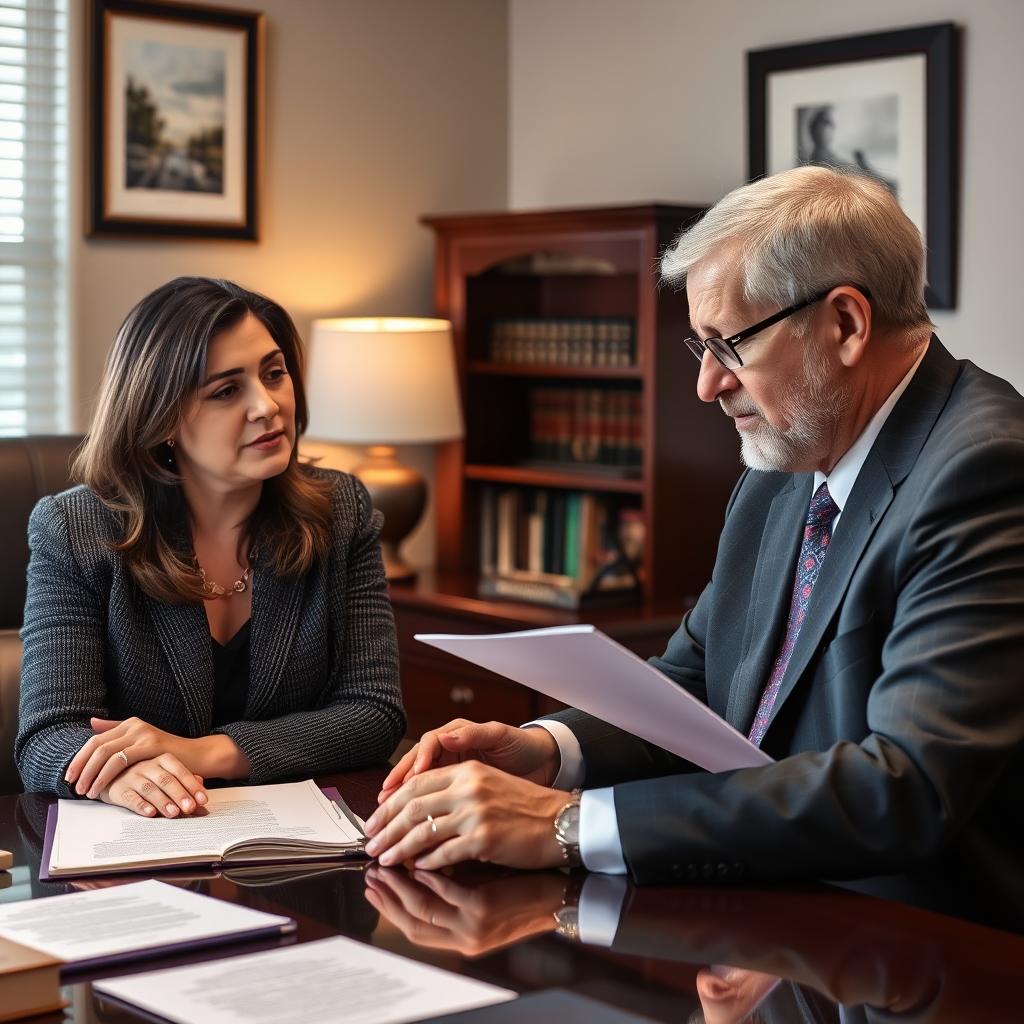
Foundation Planning Lawyer Dinwiddie County
Establishing a private foundation in Dinwiddie County requires precise adherence to Virginia and federal tax law. A Foundation Planning Lawyer Dinwiddie County ensures your charitable entity is structured for maximum tax efficiency and compliance. The process involves filing Articles of Incorporation with the State Corporation Commission and applying for 501(c)(3) status with the IRS. Law Offices Of SRIS, P.C.—Advocacy Without Borders. (Confirmed by SRIS, P.C.)
Statutory Definition of a Private Foundation in Virginia
Virginia law governs the creation of nonprofit corporations, which form the legal basis for most private foundations. The primary statute is § 13.1-801 et seq. of the Code of Virginia, which outlines the requirements for nonprofit incorporation. This legal structure is essential for any Foundation Planning Lawyer Dinwiddie County to establish before pursuing federal tax-exempt status. The code mandates specific provisions in the Articles of Incorporation, including a clear charitable purpose and a dissolution clause directing assets to another 501(c)(3) organization.
At the federal level, the Internal Revenue Code Section 501(c)(3) defines tax-exempt charitable organizations. Private foundations are a subset of 501(c)(3) entities, subject to specific excise taxes and operational restrictions under IRC Sections 4940-4945. Compliance with both state corporate law and federal tax law is non-negotiable. Failure to properly file or maintain status can result in penalties, loss of tax exemption, and personal liability for directors.
What legal documents are required to form a foundation?
The core documents are Articles of Incorporation filed with the Virginia SCC and Bylaws adopted by the incorporators. Your Foundation Planning Lawyer Dinwiddie County will draft these to meet state law and IRS expectations. The IRS requires Form 1023 or 1023-EZ to apply for 501(c)(3) status. An Employer Identification Number (EIN) from the IRS is also mandatory before opening bank accounts.
What is the difference between a public charity and a private foundation?
A private foundation is typically funded by a single source, like a family or corporation, and is subject to stricter IRS rules and excise taxes. A public charity receives broad public support and has more flexible operational rules. The IRS application and ongoing reporting requirements differ significantly between the two structures.
Can a foundation engage in business activities?
Any business activity must be substantially related to the foundation’s exempt charitable purpose. Unrelated business income is taxable under IRC Section 511. A foundation’s investments must not jeopardize its charitable assets. Legal counsel is critical to avoid activities that could trigger penalties or revocation of tax status.
The Insider Procedural Edge in Dinwiddie County
The Dinwiddie County Circuit Court clerk’s Location, located at 14008 Boydton Plank Rd, Dinwiddie, VA 23841, handles certain fiduciary matters related to charitable trusts. For incorporating a nonprofit foundation, the primary filing is with the Virginia State Corporation Commission (SCC) in Richmond. The SCC’s standard processing time for nonprofit articles is 5-7 business days if filed correctly. The filing fee for Articles of Incorporation for a nonstock corporation is $75. Procedural specifics for Dinwiddie County are reviewed during a Consultation by appointment at our Dinwiddie County Location. Learn more about Virginia legal services.
After state incorporation, the IRS processing time for Form 1023 can exceed 3 months. Expedited processing is rarely granted. Local probate courts may become involved if a foundation is established through a testamentary trust in a will. Understanding the interplay between state corporate procedure and federal tax procedure is where experienced counsel proves its value.
The legal process in Dinwiddie County follows specific procedural requirements that affect case timelines and outcomes. Courts in this jurisdiction apply local rules that may differ from neighboring areas. An attorney familiar with Dinwiddie County court procedures can identify procedural advantages relevant to your situation.
What is the typical timeline from start to finish?
From drafting to receiving a finalized IRS determination letter typically takes 4 to 6 months. The Virginia SCC incorporation is the fastest step. The IRS review is the longest variable. Any errors in the application cause significant delays. A careful Foundation Planning Lawyer Dinwiddie County can help avoid these pitfalls.
Are there local county filing requirements beyond the state?
Dinwiddie County does not require a separate business license for a nonprofit corporation. The foundation may need to file a business personal property tax return if it holds taxable assets. Local zoning laws should be checked if the foundation will maintain a physical Location. These details are confirmed during the planning process.
Penalties, Tax Implications, and Defense Strategies
The most common financial penalty for private foundations is the IRS excise tax on net investment income, currently 1.39%. Failure to comply with operational rules can lead to severe sanctions. The table below outlines key penalties and tax implications. Learn more about criminal defense representation.
Virginia law establishes specific statutory frameworks that govern these matters. Each case involves unique factual circumstances that require careful legal analysis. SRIS, P.C. attorneys evaluate every relevant factor when developing case strategy for clients in Dinwiddie County.
| Offense / Issue | Penalty / Implication | Notes |
|---|---|---|
| Failure to File Annual Return (Form 990-PF) | $20 per day, up to $10,000 or 5% of gross receipts. | Penalties increase for larger organizations. |
| Self-Dealing (IRC 4941) | Initial tax of 10% on disqualified person; 5% on foundation manager. | Transaction must be corrected; additional 200% tax possible. |
| Failure to Distribute Income (IRC 4942) | 30% excise tax on undistributed amount. | Must distribute roughly 5% of asset value annually. |
| Excess Business Holdings (IRC 4943) | 10% excise tax on value of excess holdings. | Must dispose of excess holdings; additional 200% tax possible. |
| Jeopardizing Investments (IRC 4944) | 10% excise tax on amount invested; 10% on manager. | Requires removal of investment; additional 25% tax possible. |
| Taxable Expenditures (IRC 4945) | 20% excise tax on expenditure; 5% on manager. | For political lobbying, non-charitable grants, etc. |
[Insider Insight] The Virginia Attorney General’s Charitable Trusts Section monitors foundation compliance. They focus on ensuring charitable assets are used properly. Proactive legal review of grants, investments, and transactions is the best defense against costly excise taxes and state enforcement actions.
What are the ongoing compliance duties for a foundation?
A foundation must file the IRS Form 990-PF annually and a registered agent report with the Virginia SCC. Financial records must be carefully kept. Minutes of director meetings must document all key decisions. An annual audit by a CPA is often advisable for larger foundations.
Can foundation managers be held personally liable?
Yes, for participating in prohibited acts like self-dealing or for failing to exercise due diligence. The IRS can impose excise taxes directly on managers. State law may also permit claims for breach of fiduciary duty. Directors and officers insurance (D&O) is a critical risk management tool.
Court procedures in Dinwiddie County require proper documentation and adherence to filing deadlines. Missing a deadline or submitting incomplete filings can negatively impact case outcomes. Working with an attorney who handles cases in Dinwiddie County courts regularly ensures that procedural requirements are met correctly and on time. Learn more about DUI defense services.
Why Hire SRIS, P.C. for Your Foundation Planning
Our lead attorney for complex fiduciary matters has over 15 years of experience structuring Virginia nonprofit entities.
Attorney Profile: Our seasoned legal team includes attorneys proficient in Virginia corporate and tax law. They have guided numerous clients through the precise process of establishing 501(c)(3) private foundations. SRIS, P.C. has a documented record of successful entity formations and IRS approvals. We focus on building compliant, sustainable structures from the outset to avoid future legal and tax problems.
The timeline for resolving legal matters in Dinwiddie County depends on multiple factors including case type, court scheduling, and the positions of all parties involved. SRIS, P.C. keeps clients informed throughout the process and works to move cases forward as efficiently as possible.
We provide more than just document preparation. We analyze your charitable goals to recommend the most effective structure. We coordinate with your financial advisor and accountant to ensure a unified plan. Our Dinwiddie County Location offers convenient access for local clients. We handle all state and federal correspondence, reducing your administrative burden.
Localized FAQs for Dinwiddie County Foundation Planning
What is the first step to start a private foundation in Dinwiddie County?
Consult with a Foundation Planning Lawyer Dinwiddie County to define your charitable purpose and draft the Articles of Incorporation. The first legal step is filing those Articles with the Virginia State Corporation Commission. Learn more about our experienced legal team.
How much does it cost to set up a foundation legally?
Costs include Virginia SCC filing fees ($75), IRS application fees ($275 or $600), and legal fees. Total costs vary based on foundation complexity and asset structure. A detailed estimate is provided during your initial consultation.
Can I put real estate or other assets into the foundation?
Yes, but transferring titled assets like real estate requires a formal deed and may have tax implications. Proper valuation and transfer documentation are essential to avoid self-dealing penalties.
Financial implications are often a significant concern in legal proceedings. Virginia courts consider relevant financial factors when making determinations. Proper preparation of financial documentation strengthens your position and supports favorable outcomes in Dinwiddie County courts.
Who should be on the foundation’s board of directors?
Select individuals who understand fiduciary duty and your charitable mission. Virginia law requires at least one director. Many founders include family members, trusted advisors, or community leaders. We can advise on board composition and governance.
What ongoing help does SRIS, P.C. provide after setup?
We assist with annual compliance filings, review grant-making procedures, advise on investment policies, and represent the foundation in any state or IRS inquiries. Ongoing counsel ensures long-term operational integrity.
Proximity, Consultation, and Critical Disclaimer
Our legal team serves clients throughout Dinwiddie County. For a foundation planning consultation by appointment, call our dedicated line at 804-477-1720. We are available 24/7 to schedule your case review. SRIS, P.C. is committed to providing strategic legal counsel for your charitable endeavors in Virginia.
Law Offices Of SRIS, P.C. —Advocacy Without Borders. maintains a network of Locations to serve clients. Our attorneys are admitted to practice in Virginia and focus on delivering results-oriented legal strategies.
Past results do not predict future outcomes.