
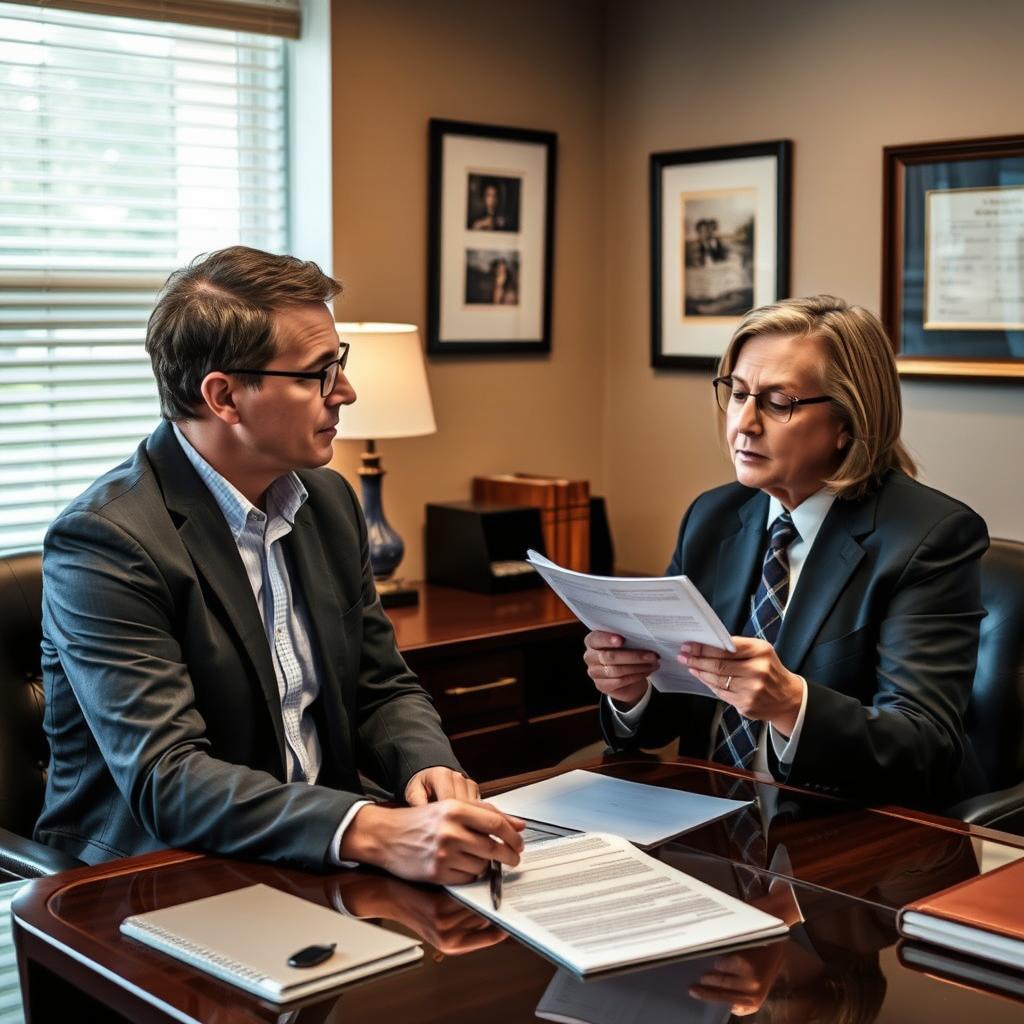
Foundation Planning Lawyer Madison County
Establishing a private foundation in Madison County requires strict adherence to Virginia and federal tax law. A Foundation Planning Lawyer Madison County ensures your charitable entity is structured correctly from the start. Law Offices Of SRIS, P.C.—Advocacy Without Borders. Our attorneys handle Articles of Incorporation, IRS Form 1023, and ongoing compliance. We provide direct counsel for Madison County philanthropists. (Confirmed by SRIS, P.C.)
Statutory Definition of a Virginia Private Foundation
Virginia Code § 13.1-801 et seq. governs nonprofit corporate formation, while federal tax status is defined under Internal Revenue Code § 509(a) as a private foundation. A private foundation is a charitable organization typically funded by a single source, like a family or corporation, and is subject to excise taxes and specific operational restrictions. The legal structure is distinct from a public charity. Proper formation under Virginia law is the critical first step for any Madison County foundation. Failure to follow the precise statutory requirements can lead to denial of tax-exempt status. This creates immediate financial and operational liabilities for the founders. Virginia law mandates specific provisions in the Articles of Incorporation. These provisions must include the charitable purpose and dissolution clause. Federal law then imposes additional layers of compliance. handling this dual regulatory framework demands precise legal drafting.
What are the key Virginia code sections for foundation formation?
Virginia Code § 13.1-803 outlines the required contents of Articles of Incorporation for a nonstock corporation. This section mandates the inclusion of the corporate name, purpose, and provisions for asset distribution upon dissolution. Section 13.1-870 details the powers of such corporations. Compliance with these statutes is non-negotiable for state recognition. The State Corporation Commission will reject filings that do not conform.
How does federal tax law define a private foundation?
Internal Revenue Code § 509(a) defines a private foundation by default. Any organization granted 501(c)(3) status is a private foundation unless it meets specific public support tests. This classification triggers compliance with IRC § 4940 through § 4945. These sections govern self-dealing, mandatory distributions, and excess business holdings. The excise tax regime under § 4940 is a primary financial consideration.
What is the primary legal penalty for improper formation?
The IRS can deny or revoke 501(c)(3) tax-exempt status. This results in the foundation being taxed as a regular corporation. All donations become non-deductible for the donors. The foundation may also face penalties for back taxes and interest. State authorities can also administratively dissolve the corporation for non-compliance.
The Insider Procedural Edge in Madison County
The Madison County Circuit Court clerk’s Location at 1 Court Square, Madison, VA 22727, is where certain foundation-related judicial actions, like name changes or litigation, would be filed. For standard formation, the Virginia State Corporation Commission (SCC) in Richmond handles all corporate filings. The procedural fact for Madison County is that local philanthropists often work with regional financial institutions. These institutions require impeccable formation documents. The timeline for SCC approval of Articles of Incorporation is typically 5-7 business days if filed correctly. IRS determination for 501(c)(3) status currently takes 3-6 months. The filing fee for Articles of Incorporation with the SCC is $75. The IRS user fee for Form 1023 is $600. Procedural specifics for Madison County are reviewed during a Consultation by appointment at our Madison County Location. Local counsel understands the interplay between state filing and local intent. Learn more about Virginia legal services.
What is the exact address for the primary court involved?
The Madison County Circuit Court is located at 1 Court Square, Madison, VA 22727. This court has jurisdiction over any civil litigation involving a foundation. This includes disputes over governance or charitable trust enforcement. The clerk’s Location maintains all official court records.
How long does the full formation process typically take?
From drafting to full IRS recognition takes a minimum of 4 months. Virginia SCC incorporation can be completed in under two weeks. The IRS review period is the longest variable. Preparing a flawless Form 1023 submission is crucial to avoid delays. Requests for additional information can add months to the timeline.
What are the specific filing fees for Virginia and the IRS?
The Virginia State Corporation Commission charges a $75 fee for filing Articles of Incorporation. The IRS charges a $600 user fee for Form 1023. Expedited handling is not available for IRS determination letter requests. Budget for these fees as non-negotiable start-up costs.
Penalties & Defense Strategies for Foundation Compliance
The most common penalty range for private foundation violations involves IRS excise taxes starting at 10% of the amount involved. Federal tax law imposes strict penalties for operational failures. These penalties can escalate quickly for repeated offenses. A Foundation Planning Lawyer Madison County builds compliance into the governing documents from day one. Proactive counsel is the only effective defense against these costly sanctions. Learn more about criminal defense representation.
| Offense | Penalty | Notes |
|---|---|---|
| Self-Dealing (IRC § 4941) | Initial tax of 10% on disqualified person; 5% on foundation manager (up to $20,000). | Applies to sales, leases, loans, or compensation between the foundation and its insiders. |
| Failure to Distribute Income (IRC § 4942) | 30% excise tax on the undistributed amount. | Private foundations must annually distribute roughly 5% of investment assets. |
| Excess Business Holdings (IRC § 4943) | 10% tax on the value of excess holdings; 200% tax if not corrected. | Limits foundation ownership in any business enterprise. |
| Jeopardizing Investments (IRC § 4944) | 10% tax on the amount invested; 25% on foundation manager. | Penalizes investments that threaten charitable purposes. |
| Taxable Expenditures (IRC § 4945) | 20% tax on the expenditure; 5% on foundation manager. | For political lobbying, grants to individuals, or non-charitable activities. |
[Insider Insight] The Virginia Attorney General’s Charitable Trusts Section monitors foundation activities. They coordinate with the IRS on major violations. Madison County foundations are not immune to this scrutiny. Local prosecutors defer to these state and federal authorities. Early legal intervention can often negotiate corrective action before penalties are assessed.
What is the single biggest financial risk for a foundation?
Loss of 501(c)(3) status is the most catastrophic financial risk. This triggers corporate income tax on all net investment income. All past donor deductions could be challenged. The foundation’s reputation for charitable work is permanently damaged. Recovery from this status is legally arduous and expensive.
How can a foundation lawyer prevent self-dealing accusations?
Clear conflict-of-interest policies in the bylaws are essential. All transactions with disqualified persons must be approved in advance. Documentation must prove the transaction benefits the foundation. Fair market value must be rigorously established. An independent board member should review all such deals.
What happens if a foundation fails to make its annual distributions?
The IRS imposes a 30% excise tax on the undistributed income. The foundation must then distribute the original amount plus the tax. Repeated failure leads to increased scrutiny. The Attorney General can petition to remove the board. The foundation may be forced into a supervised dissolution. Learn more about DUI defense services.
Why Hire SRIS, P.C. for Your Madison County Foundation
Attorney Bryan Block brings direct experience in structured organizational planning to foundation law. His background ensures your documents are built for both compliance and practical governance. SRIS, P.C. has secured successful outcomes for clients in Madison County requiring precise entity formation.
Bryan Block
Virginia Bar Certified.
Focus on corporate and nonprofit structuring.
Direct experience drafting complex governing instruments.
Our Madison County Location provides localized service for your charitable planning needs. We draft Articles of Incorporation with the specific charitable clauses required by Virginia law. We prepare and submit the complete Form 1023 application package to the IRS. We establish your initial corporate record book and compliance calendar. We provide ongoing counsel to the board on meeting minutes and grant-making procedures. Our goal is to create a durable structure that fulfills your philanthropic vision. We avoid the common pitfalls that trigger IRS audits. Contact our team for a Consultation by appointment to discuss your foundation’s blueprint.
Localized FAQs for Madison County Foundation Planning
What does a private foundation setup lawyer in Madison County do?
A private foundation setup lawyer in Madison County drafts your Articles of Incorporation, files with the Virginia SCC, and prepares the IRS Form 1023. They ensure all legal requirements for tax-exempt status are met under Virginia and federal law. Learn more about our experienced legal team.
Why do I need a charitable foundation lawyer in Madison County?
You need a charitable foundation lawyer in Madison County to handle the complex IRS rules and avoid penalties. Local counsel understands how to structure grants and operations to maintain compliance with state oversight.
How much does it cost to set up a foundation in Virginia?
Beyond state and IRS filing fees, legal costs vary by complexity. A direct foundation requires significant drafting and review. A Consultation by appointment at SRIS, P.C. provides a specific cost estimate.
Can I use a foundation to control a family business in Madison County?
IRC § 4943 severely limits a foundation’s ownership in a business. Excess business holdings can trigger major excise taxes. A lawyer can advise on permissible structures that align with charitable goals.
What is the difference between a public charity and a private foundation?
A public charity receives broad public support and has fewer restrictions. A private foundation is typically funded by one source and is subject to excise taxes and mandatory payout rules. The legal formation steps differ.
Proximity, CTA & Disclaimer
Our Madison County Location serves clients throughout the region. We are positioned to assist with foundation planning needs specific to this locality. Consultation by appointment. Call 24/7. Our team is ready to discuss the structure of your charitable entity. The legal process requires careful attention to detail from the initial concept. Do not proceed with organizers or online services without legal review. The long-term viability of your foundation depends on proper formation. Contact SRIS, P.C. to begin the process.
Law Offices Of SRIS, P.C.
—Advocacy Without Borders.
Consultation by appointment. Call 24/7.
Past results do not predict future outcomes.