
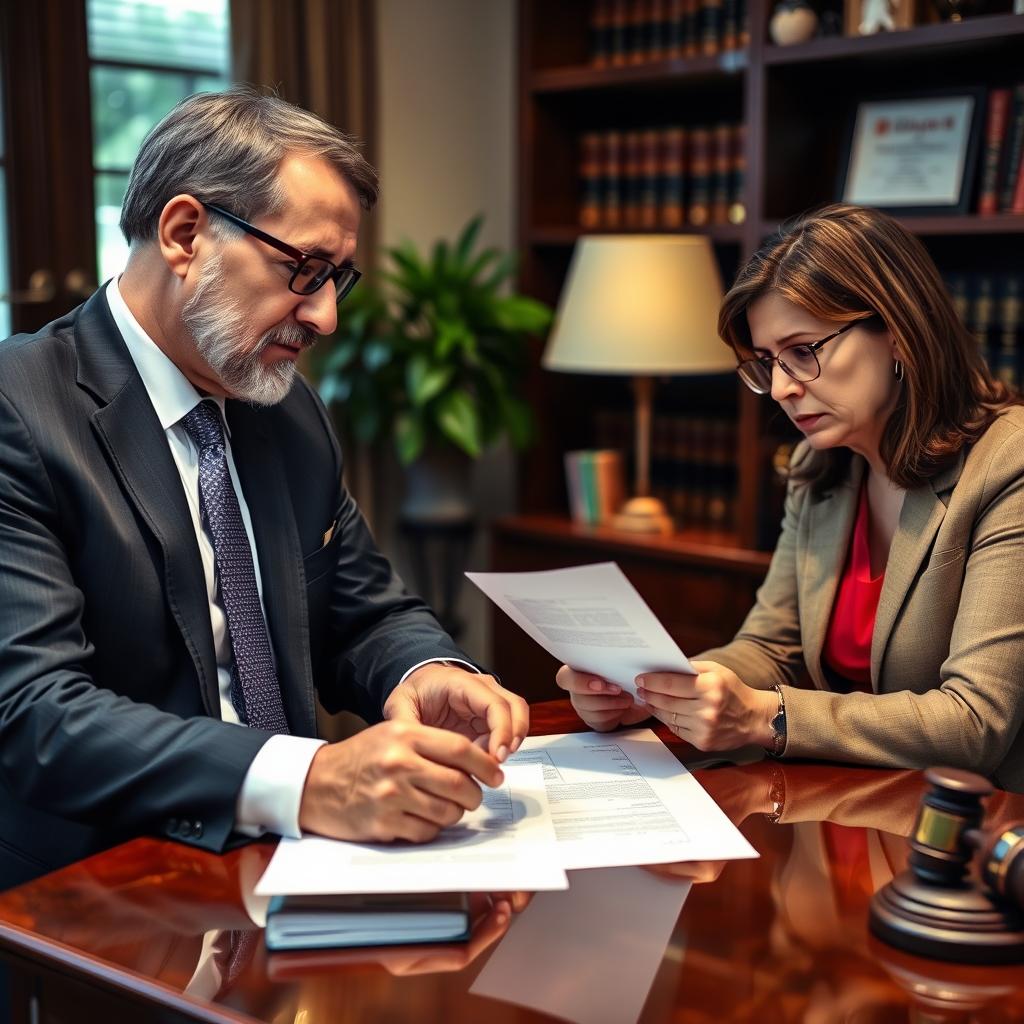
Charitable Trust Lawyer Frederick County
A Charitable Trust Lawyer Frederick County handles the creation and administration of trusts for philanthropic purposes under Virginia law. Law Offices Of SRIS, P.C.—Advocacy Without Borders. provides precise legal guidance for these complex instruments. Proper drafting ensures your charitable intent is fulfilled and complies with all state regulations. Our Frederick County Location offers direct access to experienced counsel for your philanthropic planning. (Confirmed by SRIS, P.C.)
Virginia’s Statutory Framework for Charitable Trusts
Virginia Code § 64.2-700 et seq. governs charitable trusts, classifying them as fiduciary arrangements for exclusively charitable purposes with enforcement by the Virginia Attorney General. The primary statute for charitable trust formation and administration in Frederick County is the Virginia Uniform Trust Code. This body of law defines a charitable trust as a fiduciary relationship with property held by a trustee for a purpose beneficial to the community. The trust must serve a legally recognized charitable objective, such as relief of poverty, advancement of education, or promotion of health. The Virginia Attorney General has the exclusive authority to enforce the terms of a charitable trust and ensure its charitable purpose is carried out. This is a critical difference from private trusts, which are enforced by beneficiaries. Failure to properly establish or administer the trust according to these statutes can lead to legal challenges, reformation, or even cy pres proceedings to redirect the trust assets.
What legal requirements define a valid charitable trust in Virginia?
A valid charitable trust in Virginia requires a clear charitable intent, identifiable property, and a legally permissible charitable purpose. The settlor must manifest an intention to create a trust for a purpose recognized as charitable under Virginia law. The trust property, or corpus, must be transferred to the trustee. The purpose must fall within categories like poverty relief, education, religion, health, or other community benefits. The trust must also comply with the Rule Against Perpetuities as modified by Virginia law for charitable trusts. Proper drafting by a Charitable Trust Lawyer Frederick County is essential to meet all statutory formalities.
Who has legal standing to enforce a charitable trust in Frederick County?
The Virginia Attorney General has the primary legal standing to enforce charitable trusts in Frederick County. Unlike private trusts, individual beneficiaries do not have standing to sue for enforcement. The Attorney General’s Location represents the public interest in ensuring the trust serves its stated charitable purpose. The named trustee or a successor trustee may also bring actions related to trust administration. In limited circumstances, a person with a special interest in the trust may petition the court. The Frederick County Circuit Court has jurisdiction over any local enforcement actions.
What are the key differences between a private foundation and a charitable trust?
A charitable trust is a fiduciary relationship governed by trust law, while a private foundation is a type of tax-exempt corporation. Charitable trusts are created by a trust instrument and are subject to the Virginia Uniform Trust Code. Private foundations are formed by filing articles of incorporation with the State Corporation Commission. Trusts offer more flexibility in structure and distribution of assets. Foundations have a more rigid corporate governance structure with a board of directors. Both require IRS approval for tax-exempt status under Section 501(c)(3). The choice depends on the settlor’s goals for control, duration, and administrative complexity.
The Insider Procedural Edge in Frederick County
The Frederick County Circuit Court, located at 5 N. Kent Street, Winchester, VA 22601, handles all charitable trust matters. This court oversees the judicial proceedings related to the creation, modification, and termination of charitable trusts. Filing a petition to establish or interpret a charitable trust requires adherence to specific local rules. The Clerk of the Circuit Court for Frederick County manages the filing and docketing of all trust-related pleadings. Procedural specifics for Frederick County are reviewed during a Consultation by appointment at our Frederick County Location. The local judiciary is familiar with Virginia trust law but expects precise, well-drafted petitions. Timelines for hearings can vary based on the court’s civil docket. Filing fees are set by statute and should be confirmed with the clerk’s Location at the time of filing. Learn more about Virginia legal services.
What is the typical timeline for court approval of a charitable trust in Frederick County?
The timeline for court approval of a charitable trust in Frederick County depends on the complexity of the petition. A direct petition for declaratory judgment on trust validity may be scheduled within a few months. Contested matters or those requiring cy pres applications can take significantly longer. The court’s civil docket schedule is a primary factor. The efficiency of the petition’s preparation by your Charitable Trust Lawyer Frederick County directly impacts the speed. All required notices to the Virginia Attorney General must be properly served, which adds to the schedule.
What specific documents must be filed with the Frederick County Circuit Court?
You must file the original trust instrument, a petition for approval or declaration, and a proposed order. The petition must state the facts demonstrating the charitable nature of the trust and compliance with Virginia law. A certificate of service showing notice was provided to the Virginia Attorney General is mandatory. Some situations may require an accounting or a report from the proposed trustee. The Clerk of the Circuit Court provides specific cover sheets and filing forms. All documents must comply with the Virginia Supreme Court’s formatting rules.
How does the Frederick County court interact with the Virginia Attorney General’s Location on these matters?
The Frederick County Circuit Court requires proof that the Virginia Attorney General’s Location has been served with all pleadings. The Attorney General may file a response to the petition or appear at hearings. The court often relies on the Attorney General’s analysis of whether the trust serves a valid charitable purpose. For cy pres proceedings to modify a trust, the Attorney General’s consent is frequently sought. This interaction is a standard part of the judicial process for charitable trusts in Virginia.
Penalties, Tax Implications, and Defense Strategies
The most significant penalty for mismanaging a charitable trust is the loss of tax-exempt status and potential personal liability for the trustee. Improper administration can trigger IRS audits, excise taxes on prohibited transactions, and legal action by the Virginia Attorney General. A Charitable Trust Lawyer Frederick County develops strategies to defend against allegations of mismanagement or deviation from the trust’s purpose. Learn more about criminal defense representation.
| Issue | Potential Consequence | Notes |
|---|---|---|
| Failure to File IRS Form 990-PF | Daily penalties; loss of tax exemption | Required for private foundations and some trusts. |
| Engaging in Prohibited Transactions | Excise taxes under IRC 4941-4945; potential trustee removal | Includes self-dealing, jeopardizing investments. |
| Violation of Trust Terms (Diversion) | Action by VA Attorney General; surcharge against trustee | The trustee may be personally liable for lost assets. |
| Failure to Distribute Income | Excise tax on undistributed income | Mandatory annual payouts for private foundations. |
| Inadequate Recordkeeping | Inability to defend administration; presumption of misconduct | Accurate books are a fiduciary duty. |
[Insider Insight] The Virginia Attorney General’s Charitable Trusts Unit actively reviews filings and can initiate inquiries. In Frederick County, the Circuit Court judges expect trustees to demonstrate strict adherence to their fiduciary duties. Proactive compliance and detailed recordkeeping are the best defense against any challenge.
What are the specific tax penalties a charitable trust can face?
Charitable trusts face IRS excise taxes for acts of self-dealing, failure to distribute income, and excess business holdings. The initial tax on self-dealing is 10% of the amount involved, with an additional 200% tax if not corrected. A tax of 30% applies to the undistributed income of a private foundation. Investments that jeopardize charitable purpose can incur a 10% tax on the amount. These taxes are levied on both the trust and the trustee personally in some cases. Corrective action can abate some penalties if taken promptly.
How can a trustee defend against allegations of mismanagement?
A trustee defends against mismanagement claims by demonstrating adherence to the prudent investor rule and detailed recordkeeping. Maintaining complete minutes of all trustee meetings and decisions is critical. Obtaining and following professional advice on investments and distributions creates a strong defense. Compliance with all annual IRS and state reporting requirements is foundational. The trustee must show all actions were taken in good faith to further the trust’s charitable purpose. Early engagement with a Charitable Trust Lawyer Frederick County is the most effective strategy.
What happens if a charitable purpose becomes impossible to fulfill?
If a charitable purpose becomes impossible or impracticable, the trustee or Attorney General can petition for cy pres. The Frederick County Circuit Court can apply the cy pres doctrine to modify the trust’s terms. The court will seek to approximate the settlor’s original charitable intent as closely as possible. The Virginia Attorney General must be a party to any cy pres proceeding. The goal is to preserve the charitable gift for a similar purpose rather than allow the trust to fail. Learn more about DUI defense services.
Why Hire SRIS, P.C. for Your Frederick County Charitable Trust
Our lead attorney for fiduciary matters brings direct experience with Virginia’s trust and probate courts. SRIS, P.C. attorneys understand the intersection of state trust law and federal tax regulations. We draft instruments designed to withstand scrutiny from the IRS and the Virginia Attorney General. Our firm has a record of successfully establishing and defending charitable entities in Virginia. We provide clear, actionable advice to trustees on fulfilling their complex duties.
Choosing SRIS, P.C. means working with a team familiar with the Frederick County legal environment. We prepare petitions and represent clients in the Frederick County Circuit Court. Our approach focuses on preventing problems through careful drafting and compliance planning. We guide clients through interactions with the Virginia Attorney General’s Charitable Trusts Unit. For existing trusts, we conduct reviews to identify and correct potential vulnerabilities. Our goal is to ensure your philanthropic vision is realized without legal complication.
Localized FAQs for Frederick County Charitable Trusts
Do I need court approval to create a charitable trust in Frederick County?
Court approval is not always required to create a valid charitable trust in Frederick County. The trust is created by executing a properly drafted declaration or deed of trust. However, a trustee may seek a declaratory judgment from the Frederick County Circuit Court to confirm its validity. This is often done for complex trusts or to obtain a definitive ruling. Interaction with the Virginia Attorney General is part of this process.
What are the ongoing responsibilities of a charitable trustee in Virginia?
A trustee must manage trust assets prudently, make distributions consistent with the purpose, and avoid prohibited transactions. The trustee must file required annual tax returns, typically IRS Form 1041-A or 990-PF. Accurate records of all transactions and decisions must be maintained. The trustee must provide information to the Virginia Attorney General upon request. An annual accounting may be required by the trust instrument or court order. Learn more about our experienced legal team.
Can a charitable trust be changed or terminated in Frederick County?
A charitable trust can be modified or terminated under specific circumstances through the Frederick County Circuit Court. If the original purpose becomes impossible, a cy pres petition can request modification. The court may allow termination if the trust assets become too small to administer effectively. The Virginia Attorney General must be a party to any such proceeding. The settlor’s intent is the guiding principle for the court.
How are charitable trusts taxed in Virginia?
Properly established charitable trusts are exempt from federal income tax under IRC 501(c)(3). They must still file an annual information return with the IRS, such as Form 990 or 990-PF. Virginia generally conforms to federal treatment, offering state income tax exemption. Trusts are subject to excise taxes for certain prohibited transactions. Donors receive a federal and Virginia state tax deduction for contributions to a qualified trust.
What is the role of the Virginia Attorney General for my trust?
The Virginia Attorney General enforces charitable trusts to protect the public interest. The Location reviews petitions filed in circuit courts, including in Frederick County. They ensure the trust serves a valid charitable purpose and that trustees fulfill their duties. The Attorney General can investigate complaints and initiate legal action against trustees for mismanagement. They are a necessary party to any court action modifying or terminating a charitable trust.
Proximity, Contact, and Critical Disclaimer
Our team serves clients throughout Frederick County, Virginia. For a Consultation by appointment regarding your philanthropic trust planning, contact our firm. We provide clear guidance on the establishment and administration of charitable trusts under Virginia law. Call 24/7 to discuss your specific situation with our legal team.
Law Offices Of SRIS, P.C.—Advocacy Without Borders.
Consultation by appointment. Call [phone]. 24/7.
Past results do not predict future outcomes.