
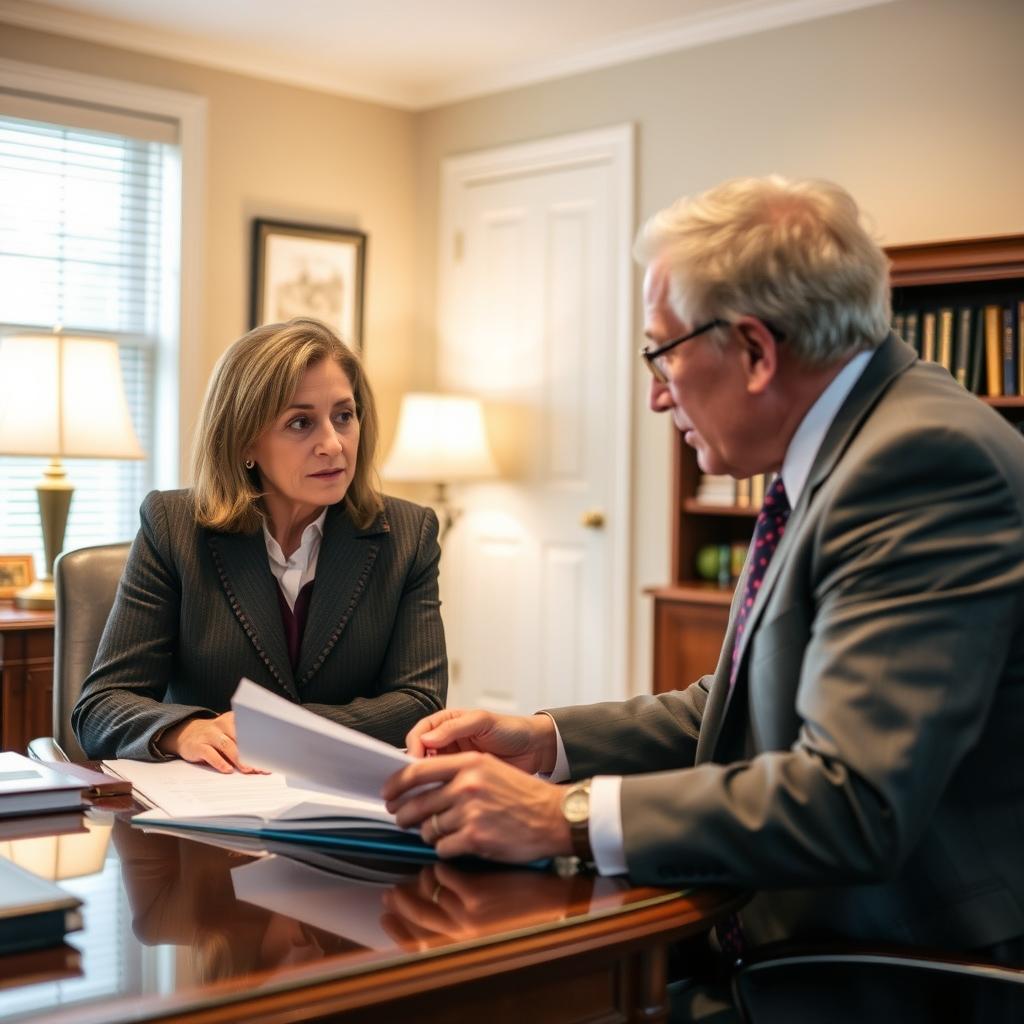
Foundation Planning Lawyer Rappahannock County
You need a Foundation Planning Lawyer Rappahannock County to establish a private charitable foundation under Virginia law. Law Offices Of SRIS, P.C.—Advocacy Without Borders. provides this legal service. Our attorneys draft articles of incorporation and bylaws for your Rappahannock County foundation. We file all documents with the Virginia State Corporation Commission and the IRS. (Confirmed by SRIS, P.C.)
Statutory Definition of a Private Foundation in Virginia
Virginia law and the Internal Revenue Code define a private foundation. The primary Virginia statute is Va. Code § 13.1-801 et seq., the Virginia Nonstock Corporation Act. This law governs the formation of non-profit corporations, which is the standard legal structure for a private foundation in Rappahannock County. The IRS classifies a private foundation under Section 509(a) of the Internal Revenue Code. This classification follows automatic designation under Section 501(c)(3). A foundation is a charitable organization that does not qualify as a public charity. It typically receives funding from a single source, like an individual, family, or corporation.
Va. Code § 13.1-801 et seq. — Nonstock Corporation — Governs formation and operation of Virginia non-profit entities, including private foundations. The Act provides the framework for creating a corporate entity that can hold assets, make grants, and operate perpetually. Compliance with this code is mandatory for any foundation established in Rappahannock County. The “maximum penalty” for non-compliance is not a fine or jail time, but legal dissolution or loss of corporate status. Failure to adhere to IRS rules results in revocation of tax-exempt status and excise taxes on foundation income.
Foundations must operate exclusively for religious, charitable, scientific, or educational purposes. The organizational documents must permanently dedicate assets to these exempt purposes. Virginia law requires specific provisions in the articles of incorporation. These provisions restrict the foundation’s activities to those allowed under Section 501(c)(3). They must also include a clause dedicating assets to another 501(c)(3) organization upon dissolution. This ensures the charitable purpose continues even if the foundation closes.
What legal structure is used for a foundation in Rappahannock County?
A nonstock corporation is the standard legal structure for a private foundation in Rappahannock County. This structure is created under the Virginia Nonstock Corporation Act. It provides a separate legal entity that shields founders and directors from personal liability. The corporation must have a registered agent physically located in Virginia. The articles of incorporation are filed with the Virginia State Corporation Commission.
What are the key IRS code sections for foundation tax exemption?
Sections 501(c)(3) and 509(a) of the Internal Revenue Code are critical for foundation tax exemption. Section 501(c)(3) grants federal tax-exempt status for charitable organizations. Section 509(a) defines private foundations as a subset of 501(c)(3) organizations. Foundations must avoid prohibited transactions outlined in Section 4941-4945. Violations trigger excise taxes on the foundation and its managers.
What is the difference between a public charity and a private foundation?
A public charity receives broad public support, while a private foundation has a concentrated funding source. Public charities include churches, schools, and hospitals. Private foundations are typically funded by an individual, family, or business corpus. Foundations face more restrictive IRS rules on self-dealing and investment income. They must also distribute a minimum percentage of assets annually for charitable purposes. Learn more about Virginia legal services.
The Insider Procedural Edge for Rappahannock County
Foundation formation is a state and federal administrative process, not typically a court matter. The primary filing is with the Virginia State Corporation Commission (SCC). You must also apply to the IRS for a federal Employer Identification Number (EIN). The critical step is filing Form 1023 or 1023-EZ with the IRS to obtain 501(c)(3) status. Virginia may also require a charitable solicitation registration if the foundation will fundraise.
Procedural specifics for Rappahannock County are reviewed during a Consultation by appointment at our Virginia Location. The Virginia SCC filing fee for nonstock articles of incorporation is $75. The IRS filing fee for Form 1023 is $600. The simplified Form 1023-EZ has a $275 fee. The entire process from incorporation to IRS determination can take several months. Expedited handling is not generally available for these applications.
Your foundation must appoint a registered agent with a physical address in Virginia. The registered agent accepts legal and tax documents on behalf of the corporation. The foundation must also adopt detailed bylaws governing director meetings and officer duties. Initial directors must be named in the articles of incorporation. An organizational meeting must be held to adopt bylaws and authorize the IRS application. Minutes of this meeting must be kept in the foundation’s corporate records.
What government agencies are involved in forming a Virginia foundation?
The Virginia State Corporation Commission and the Internal Revenue Service are the primary agencies. The SCC handles the corporate formation and annual report filings. The IRS determines tax-exempt status under Section 501(c)(3). The Virginia Department of Taxation may require a state tax exemption application. The foundation may also need to register with the Virginia Location of Charitable and Regulatory Programs.
How long does it take to get IRS 501(c)(3) approval?
IRS approval for 501(c)(3) status typically takes between 3 to 12 months. Processing time depends on the completeness of Form 1023 and IRS workload. Using the simpler Form 1023-EZ can reduce processing time to 2-4 weeks. This form is only available to organizations expecting less than $50,000 in annual revenue. Any errors or requests for additional information from the IRS will delay the process. Learn more about criminal defense representation.
What ongoing compliance filings are required for a Virginia foundation?
A Virginia foundation must file an annual report with the State Corporation Commission. The IRS requires the annual Form 990-PF, Return of Private Foundation. This form details the foundation’s finances, grants, and activities. Foundations must also pay an annual registration fee to the Virginia SCC. Failure to file these reports can lead to penalties and loss of corporate or tax-exempt status.
Penalties & Defense Strategies for Foundation Compliance
The most common penalty for foundation non-compliance is the IRS imposition of excise taxes. These taxes are levied on the foundation itself and its managers for prohibited acts. The initial tax on acts of self-dealing under IRC 4941 is 10% of the amount involved. An additional 200% tax can be applied if the act is not corrected. The IRS can also revoke the foundation’s tax-exempt status for serious or repeated violations.
| Offense / Violation | Penalty | Notes |
|---|---|---|
| Self-Dealing (IRC 4941) | 10% initial tax on amount involved; 200% additional tax if uncorrected. | Applies to transactions between foundation and disqualified persons. |
| Failure to Distribute Income (IRC 4942) | 30% tax on undistributed income. | Foundations must distribute roughly 5% of investment assets annually. |
| Excess Business Holdings (IRC 4943) | 10% tax on value of excess holdings; 200% tax if not disposed of. | Limits foundation ownership in private businesses. |
| Jeopardizing Investments (IRC 4944) | 10% tax on amount invested; 25% tax on manager if knowing violation. | Prohibits speculative or risky investments. |
| Taxable Expenditures (IRC 4945) | 20% tax on expenditure; 5% on manager. | For political lobbying, grants to individuals without IRS approval, etc. |
| Failure to File Form 990-PF | $20 per day penalty up to $10,000 or 5% of annual gross receipts. | Higher penalties for organizations with over $1 million in receipts. |
| Failure to File VA Annual Report | Late fee; eventual administrative dissolution of corporation. | Virginia SCC can revoke the foundation’s corporate charter. |
[Insider Insight] The Virginia Attorney General’s Location Charitable Trusts Section oversees foundation compliance. They focus on ensuring assets are used for stated charitable purposes. Proactive legal counsel is the best defense against these penalties. An experienced foundation planning lawyer Rappahannock County can establish proper governance from the start. They draft clear conflict-of-interest policies and investment guidelines. They ensure all transactions are properly documented and approved. This creates a paper trail that demonstrates good faith and compliance intent to regulators.
What are the most common IRS excise taxes for private foundations?
Taxes on self-dealing and failure to distribute income are the most common IRS excise taxes. Self-dealing includes selling property to or paying a disqualified person from foundation assets. The failure to distribute tax applies if the foundation does not spend enough on charitable activities. These taxes are punitive and designed to force corrective action. Legal counsel helps structure transactions to avoid these prohibited acts entirely.
How can a foundation defend against an IRS penalty assessment?
A foundation can defend by proving reasonable cause and not willful neglect. This requires documentation showing reliance on professional advice. The foundation must show it acted in good faith to comply with complex rules. Correcting the violation promptly can abate the additional 200% penalty. An attorney can negotiate with the IRS for penalty abatement based on these factors. Learn more about DUI defense services.
What happens if a Virginia foundation loses its tax-exempt status?
Loss of 501(c)(3) status means the foundation becomes a taxable corporation. It must pay income tax on its investment earnings and capital gains. Donors can no longer make tax-deductible contributions to the foundation. The foundation may also be required to pay back taxes and penalties. Reinstatement of status is a difficult, lengthy process with the IRS.
Why Hire SRIS, P.C. for Your Rappahannock County Foundation
SRIS, P.C. attorneys understand the intersection of Virginia corporate law and federal tax law for charities. Our legal team drafts precise foundational documents that meet all state and IRS requirements. We handle the complete filing process with the Virginia SCC and the IRS. We advise on governance to prevent future compliance issues and excise taxes. Our goal is to establish a durable legal structure for your philanthropic vision.
Attorney Background: Our attorneys bring direct experience in entity formation and tax planning. They prepare the articles, bylaws, and conflict-of-interest policies required for a solid foundation. They handle the specific requirements of the Virginia Nonstock Corporation Act. They ensure your application meets the intricate public support tests of the IRS. This detailed approach prevents delays and sets your foundation up for long-term success.
SRIS, P.C. provides advocacy without borders for your charitable planning needs. We establish the legal framework so you can focus on your mission. Our process includes planning for successor trustees and a clear grant-making policy. We help you define the charitable purposes that will guide your foundation’s work for generations. Proper legal foundation planning protects your assets and maximizes their impact.
What specific documents does a foundation planning lawyer draft?
A foundation planning lawyer drafts the articles of incorporation and corporate bylaws. They prepare the conflict of interest policy and investment policy statement. They create the initial minutes of the organizational meeting of the board of directors. They complete the IRS Form 1023 or 1023-EZ application for tax exemption. They also draft the template for grant agreements and recipient certifications. Learn more about our experienced legal team.
How does legal planning protect a foundation’s founders and directors?
Proper planning shields founders and directors from personal liability for foundation debts. It establishes clear procedures for board decisions to prevent internal disputes. It includes indemnification provisions in the bylaws to protect directors acting in good faith. It ensures compliance with laws to avoid personal liability for excise taxes. It creates a governance structure that fulfills fiduciary duties to the charitable purpose.
Localized FAQs for Rappahannock County Foundation Planning
Can I use my Rappahannock County home as the foundation’s address?
You can use a home address for a foundation, but a P.O. Box is insufficient for a registered Location. Virginia law requires a physical street address for the registered agent. Using a home address may have privacy implications. Many clients use their attorney’s business address or a commercial registered agent service.
Does a private foundation in Virginia pay property or sales tax?
A properly registered 501(c)(3) foundation is exempt from Virginia income tax. It may also be exempt from local property tax on real estate it owns. The foundation must apply for these exemptions separately with the Virginia Department of Taxation and the local commissioner of revenue. Sales tax exemption requires a separate certificate from the state.
What are the costs to set up a foundation in Rappahannock County?
Costs include Virginia SCC filing fees ($75), IRS application fees ($275-$600), and legal fees. Legal fees vary based on the complexity of the foundation’s structure and purposes. There are also costs for a registered agent service if you use one. Annual compliance costs include tax preparation and the Virginia SCC annual report fee.
Who can be on the board of my Rappahannock County foundation?
Virginia requires at least one director for a nonstock corporation. Most foundations have three or more unrelated directors for good governance. Directors can be family members, friends, or professional advisors. The IRS scrutinizes boards composed entirely of family members for potential self-dealing. A diverse board can provide valuable oversight and experience.
Can my foundation make grants outside of Rappahannock County?
Yes, a Virginia private foundation can make grants anywhere in the United States or internationally. The grants must be to other qualified 501(c)(3) public charities or for charitable purposes. International grantmaking requires additional IRS compliance steps to ensure equivalency. The foundation’s governing documents should explicitly allow for national and international grantmaking.
Proximity, CTA & Disclaimer
SRIS, P.C. serves clients throughout Rappahannock County, Virginia. Our Virginia Location is strategically positioned to assist with foundation formation across the Commonwealth. We understand the local context for charitable work in Rappahannock County and the surrounding region. Consultation by appointment. Call 703-278-0405. 24/7.
Law Offices Of SRIS, P.C.
Location: 4103 Chain Bridge Rd, Fairfax, VA 22030
Phone: 703-278-0405
Past results do not predict future outcomes.