
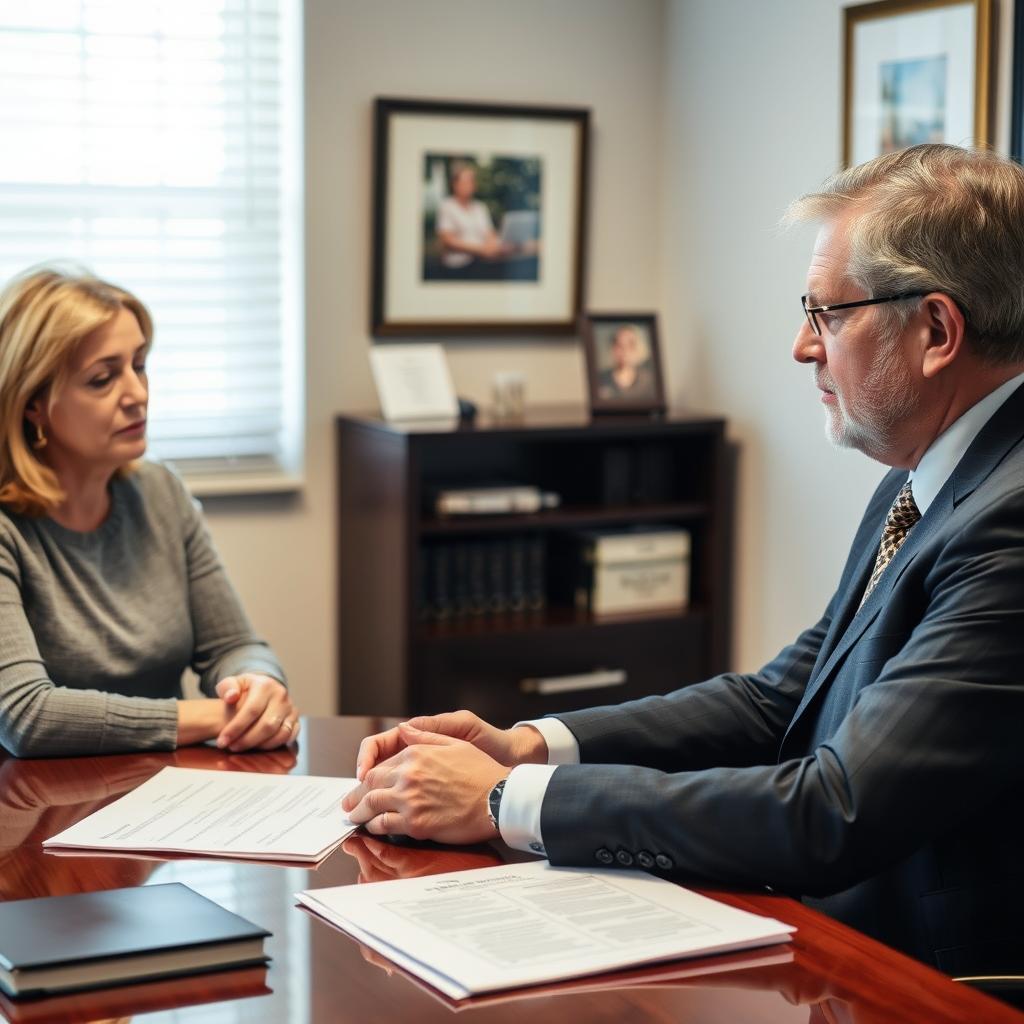
Special Needs Trust Lawyer Clarke County
A Special Needs Trust Lawyer Clarke County helps protect public benefits for disabled individuals. Law Offices Of SRIS, P.C. —Advocacy Without Borders. drafts first-party and third-party supplemental needs trusts under Virginia law. Proper planning preserves eligibility for SSI and Medicaid. A Clarke County disability trust planning lawyer ensures assets supplement care without disqualification. SRIS, P.C. provides this critical service. (Confirmed by SRIS, P.C.)
Statutory Definition of Special Needs Trusts in Virginia
Virginia law authorizes special needs trusts under specific statutory frameworks. The primary Virginia Code sections are § 64.2-779 through § 64.2-779.9, governing discretionary trusts for beneficiaries with disabilities. These statutes classify a properly drafted trust as a non-countable resource for means-tested benefit programs. The maximum penalty for improper drafting is the complete loss of Supplemental Security Income (SSI) and Medicaid eligibility for the beneficiary. Virginia’s adoption of the Uniform Trust Code provides the legal backbone for these instruments. A Special Needs Trust Lawyer Clarke County must handle these precise statutes. The trust must be irrevocable and give the trustee absolute discretion over distributions. Federal law, specifically 42 U.S.C. § 1396p(d)(4)(A), provides the safe harbor for first-party trusts. This federal statute allows a disabled individual under age 65 to place their own assets into a trust. The trust must pay back the state Medicaid agency upon the beneficiary’s death. Virginia law incorporates these federal requirements. A third-party supplemental needs trust lawyer Clarke County uses different statutes. This trust is funded with assets from someone other than the beneficiary. It falls under Virginia’s general trust law and does not require a Medicaid payback provision. The key is ensuring the trust document contains explicit language. This language must prohibit distributions that would directly replace government benefits. Distributions must be solely for supplemental needs not covered by public programs. The statutory definition is strict. Any deviation risks benefit termination.
What is the difference between a first-party and third-party special needs trust?
A first-party trust holds the disabled beneficiary’s own assets, like an inheritance or lawsuit settlement. A third-party trust is funded by assets from parents, grandparents, or other family members. The payback requirement is the critical legal distinction. A first-party trust must reimburse the state for Medicaid benefits paid. A third-party trust has no such obligation, preserving remaining assets for other family heirs. A disability trust planning lawyer Clarke County explains this crucial difference.
Who can establish a special needs trust in Clarke County?
A parent, grandparent, legal guardian, or a court can establish a first-party trust for a disabled individual. The beneficiary must be under 65 years old when the trust is funded and created. The individual must meet the Social Security Administration’s definition of disability. For a third-party trust, any family member or individual can create and fund the trust. The settlor does not need court approval if they are of sound mind and legal age. A Special Needs Trust Lawyer Clarke County prepares the petition if court establishment is necessary.
What government benefit programs are protected by a special needs trust?
A properly drafted trust protects Supplemental Security Income (SSI) and Medicaid (Medicaid-FAMIS in Virginia). It can also protect Section 8 housing assistance and Supplemental Nutrition Assistance Program (SNAP) benefits. The trust is designed not to provide basic food or shelter support. Distributions for these items are considered “in-kind support and maintenance” by the SSA. This can reduce the SSI cash benefit by up to one-third. A supplemental needs trust lawyer Clarke County structures distributions to avoid this penalty.
The Insider Procedural Edge in Clarke County
The Clarke County Circuit Court at 102 N. Church Street, Berryville, VA 22611 handles trust approvals and accountings. Procedural specifics for Clarke County are reviewed during a Consultation by appointment at our Clarke County Location. The court requires a verified petition to establish a court-ordered trust. This is common for first-party trusts where the beneficiary lacks legal capacity to sign. The filing fee for a petition to create a trust is set by Virginia statute. The timeline from filing to court order can be several weeks. The court clerk’s Location reviews the petition for completeness. A judge then signs the order establishing the trust as a legal entity. The trustee must then obtain a federal Employer Identification Number (EIN) for the trust. The trustee opens a bank account in the trust’s name. All assets are formally titled in the name of the trust. Annual accountings may be required by the court if the trust is court-established. For third-party trusts, the procedure is often non-judicial. The trust document is signed and notarized by the settlor and trustee. It is then funded by transferring assets into the trust’s name. No initial court filing is typically required. However, any future disputes or modifications may require Clarke County Circuit Court involvement. Local court temperament favors clear, well-drafted documents that comply precisely with Virginia Code. Judges expect thorough documentation of the beneficiary’s disability. This includes letters from treating physicians and copies of benefit award letters. The court’s primary concern is protecting the vulnerable beneficiary. They also ensure the trust complies with all state and federal public benefit rules. Working with a local attorney familiar with this court is a significant advantage. Learn more about Virginia legal services.
What is the typical timeline to establish a special needs trust in Clarke County?
A non-court, third-party trust can be established and funded within two to three weeks. This timeline depends on drafting the document and transferring assets. A court-ordered first-party trust takes longer, often four to eight weeks. The delay involves preparing the petition, filing with the court, and waiting for a hearing date. The Clarke County Circuit Court docket availability affects the final timeline. A disability trust planning lawyer Clarke County can provide a more precise estimate.
Are there ongoing reporting requirements for a special needs trust in Virginia?
Yes, the trustee has a fiduciary duty to manage the trust assets prudently. For a court-ordered trust, the trustee must often file annual accountings with the Clarke County Circuit Court. These accountings detail all receipts, disbursements, and current assets. Even for non-court trusts, the trustee must provide regular statements to the beneficiary or their legal representative. The trustee must also report the trust’s existence to the Social Security Administration and state Medicaid agency. Proper reporting is mandatory to maintain benefit eligibility.
Penalties & Defense Strategies for Trust Errors
The most common penalty is a reduction or termination of SSI and Medicaid benefits. This occurs if the trust is improperly drafted or administered. The Social Security Administration conducts periodic reviews. They will assess if the trust is a countable resource. If the trust terms allow distributions for food or shelter without restriction, it is countable. This can lead to immediate benefit suspension. A disqualification can cause a beneficiary to lose essential medical coverage and income.
| Offense | Penalty | Notes |
|---|---|---|
| Trust deemed a countable resource | SSI benefit suspension; Medicaid termination | Can be retroactive, creating an overpayment debt. |
| Improper distribution for basic support | SSI reduction by up to $334.73 (2024 Federal Benefit Rate) | In-kind support and maintenance (ISM) reduction. |
| Failure to file court-ordered accounting | Contempt of court; removal of trustee | Clarke County Circuit Court can impose fines. |
| Missed Medicaid payback at death | Estate claim by Virginia Department of Medical Assistance Services (DMAS) | DMAS can place a lien on any remaining assets. |
| Breach of fiduciary duty by trustee | Personal liability for losses; surcharge by the court | The beneficiary can sue for mismanagement. |
[Insider Insight] Local prosecutors are not involved in trust administration. However, the Virginia Department of Social Services and the Attorney General’s Location enforce Medicaid rules. They aggressively pursue recovery of incorrectly paid benefits. DMAS has a dedicated third-party liability unit. They audit special needs trusts upon the beneficiary’s death. Any deviation from the statutory payback formula triggers a claim against the estate. Defense requires careful drafting from the outset. The trust document must contain explicit, boilerplate language required by federal law. It must state the trust is for supplemental needs only. It must prohibit distributions that would disqualify the beneficiary from benefits. For first-party trusts, the payback clause must be precisely worded. Proactive administration is the best defense. The trustee should consult with a supplemental needs trust lawyer Clarke County before any major distribution. They should maintain detailed records of all transactions. They should obtain annual verification of the beneficiary’s continued benefit eligibility. If a problem arises, corrective action must be swift. This may involve petitioning the Clarke County Circuit Court to reform the trust. The court can modify a defective trust under Virginia Code § 64.2-729 if all parties consent. The goal is to cure the defect and restore benefits as quickly as possible. Learn more about criminal defense representation.
What happens if a trust error causes a loss of benefits?
The trustee must immediately notify the benefit agencies and seek corrective action. The beneficiary may need to reapply for SSI and Medicaid, a lengthy process. The trustee may be personally liable for benefits lost due to their error. They may need to use trust funds to support the beneficiary during the appeal. A Special Needs Trust Lawyer Clarke County can file an appeal or a petition for trust reformation.
Can a poorly drafted special needs trust be fixed?
Yes, in many cases, a trust can be amended or reformed by a court. Virginia law allows for judicial modification of trusts under certain conditions. All interested parties, including the beneficiary and remainder beneficiaries, must typically agree. The Clarke County Circuit Court must approve the modification. The court’s order can insert the correct language to protect public benefits. This is a complex legal proceeding requiring an experienced attorney.
Why Hire SRIS, P.C. for Your Clarke County Special Needs Trust
Our lead attorney for trust matters has over 15 years of experience in fiduciary law and estate planning. This attorney’s background includes drafting hundreds of special needs trusts that have withstood state and federal audits. SRIS, P.C. has a dedicated team focused on preserving public benefits for disabled Virginians. We understand the intersection of Virginia trust law and federal benefit regulations. Our firm has successfully established trusts for clients in Clarke County and across the state. We know the specific requirements of the Clarke County Circuit Court. We prepare petitions that meet the court’s expectations for completeness. Our goal is to create a bulletproof legal instrument. This prevents future problems for the beneficiary and the trustee.
Lead Trust Attorney: The attorney handling these matters has extensive credentials. Their practice is devoted to elder law and special needs planning. They are familiar with the staff and procedures at the Clarke County courthouse. They have a track record of obtaining court orders for trust establishment efficiently. They provide clear guidance to trustees on their ongoing duties. Learn more about DUI defense services.
Our differentiator is a practical, no-nonsense approach. We explain the law in clear terms without jargon. We provide trustees with written instructions for administration. We are available to answer questions as they arise during the trust’s lifetime. We also coordinate with other professionals, like financial planners and care managers. This holistic approach ensures the trust serves its purpose effectively. SRIS, P.C. offers Advocacy Without Borders for your family’s future security.
Localized FAQs for Clarke County Special Needs Trusts
What is the cost of hiring a special needs trust lawyer in Clarke County?
Costs vary based on trust complexity and whether court involvement is needed. A standard third-party trust drafting fee is a flat rate. A court-ordered first-party trust involves additional petition drafting and hearing fees. SRIS, P.C. provides a clear fee estimate during your initial Consultation by appointment.
Can a special needs trust own real estate in Clarke County?
Yes, a special needs trust can own real property, including a home. The deed must be transferred into the name of the trust. Owning a home can affect SSI eligibility if the beneficiary lives in it. A lawyer must structure this carefully to avoid benefit reductions.
Who should be the trustee of a special needs trust in Virginia?
The trustee can be a family member, a trusted friend, or a professional fiduciary like a bank. The trustee must be financially savvy and understand public benefit rules. Many families choose a professional trustee to avoid family conflict and ensure compliance. Learn more about our experienced legal team.
How does a special needs trust affect inheritance from a will in Clarke County?
An inheritance left directly to a disabled person can disqualify them from benefits. A will should direct any inheritance into a pre-existing third-party special needs trust. This keeps the inheritance as a non-countable resource. Estate planning must be coordinated with trust planning.
What happens to a special needs trust when the beneficiary dies?
The trustee pays final expenses and any required Medicaid payback. For a first-party trust, Virginia DMAS must be paid for Medicaid benefits provided. Remaining assets in a third-party trust are distributed to successor beneficiaries named in the trust document.
Proximity, CTA & Disclaimer
Our Clarke County Location serves clients throughout the county and the Northern Shenandoah Valley. We are accessible to residents in Berryville, Boyce, and White Post. Procedural specifics for Clarke County are reviewed during a Consultation by appointment at our Location. Consultation by appointment. Call 703-278-0405. 24/7. Our legal team is ready to discuss your special needs trust requirements. We draft precise documents that protect benefits and provide peace of mind. Contact SRIS, P.C. for dedicated legal support in Clarke County, Virginia.
NAP: SRIS, P.C., Consultation by appointment, 703-278-0405.
Past results do not predict future outcomes.