
Special Needs Trust Lawyer Stafford County
Families in Stafford County who care for a loved one with a disability face a distinctive planning challenge: how to provide financial support without jeopardizing eligibility for government benefits such as Supplemental Security Income (SSI) and Medicaid. A special needs trust is a legal instrument designed to address precisely that concern. When properly structured under Virginia law, a special needs trust holds assets for the benefit of an individual with a disability while preserving access to means-tested public programs. The Stafford County Circuit Court, located at 1300 Courthouse Road, has jurisdiction over trust matters, including proceedings that may involve special needs trusts, through its probate administration function. For Stafford County families in communities from Aquia Harbour to Brooke, understanding how Virginia trust law interacts with federal benefit rules is essential before making irrevocable planning decisions. Mr. Sris and his Of Counsel advise families on trust structuring, trustee selection, and ongoing administration. Reach Law Offices Of SRIS, P.C., at (888) 437-7747 to discuss your family’s planning needs. Law Offices Of SRIS, P.C. — Advocacy Without Borders.
What Special Needs Trust Planning Means in Stafford County
Stafford County sits along the I-95 corridor between Northern Virginia and Fredericksburg, a region marked by a mix of commuter families, military households connected to Quantico Marine Corps Base, and long-established residential communities. Many families in the area are raising children with disabilities or supporting adult dependents who rely on government benefits for healthcare, housing, and daily living expenses. A special needs trust becomes relevant when a parent, grandparent, or other third party wishes to leave assets for that individual’s benefit without causing a loss of eligibility. Under the Virginia Uniform Trust Code, codified at Va. Code § 64.2-700 et seq., a trust may be established to supplement—not replace—public assistance, covering expenses such as education, therapy, assistive technology, transportation, and quality-of-life enhancements that government programs do not fund.
Virginia imposes no state-level estate tax, which simplifies certain aspects of trust planning for families in Stafford County and throughout the Commonwealth. Federal transfer tax considerations remain relevant; the federal estate tax exemption is set at $15 million for 2026, meaning most families will not face federal estate tax liability. For smaller estates, Virginia offers a small estate affidavit procedure with a threshold of $75,000 under a 2025 legislative amendment, though this mechanism generally does not intersect with special needs trust planning, which is driven by beneficiary protection rather than estate size. The Stafford County Circuit Court, which administers probate and trust matters, provides the legal forum for any court-supervised trust proceedings. Families working with Mr. Sris and his Of Counsel receive guidance on how Virginia trust statutes and federal benefit regulations interact in their specific circumstances.
How Mr. Sris and His Of Counsel Handle Special Needs Trust Cases
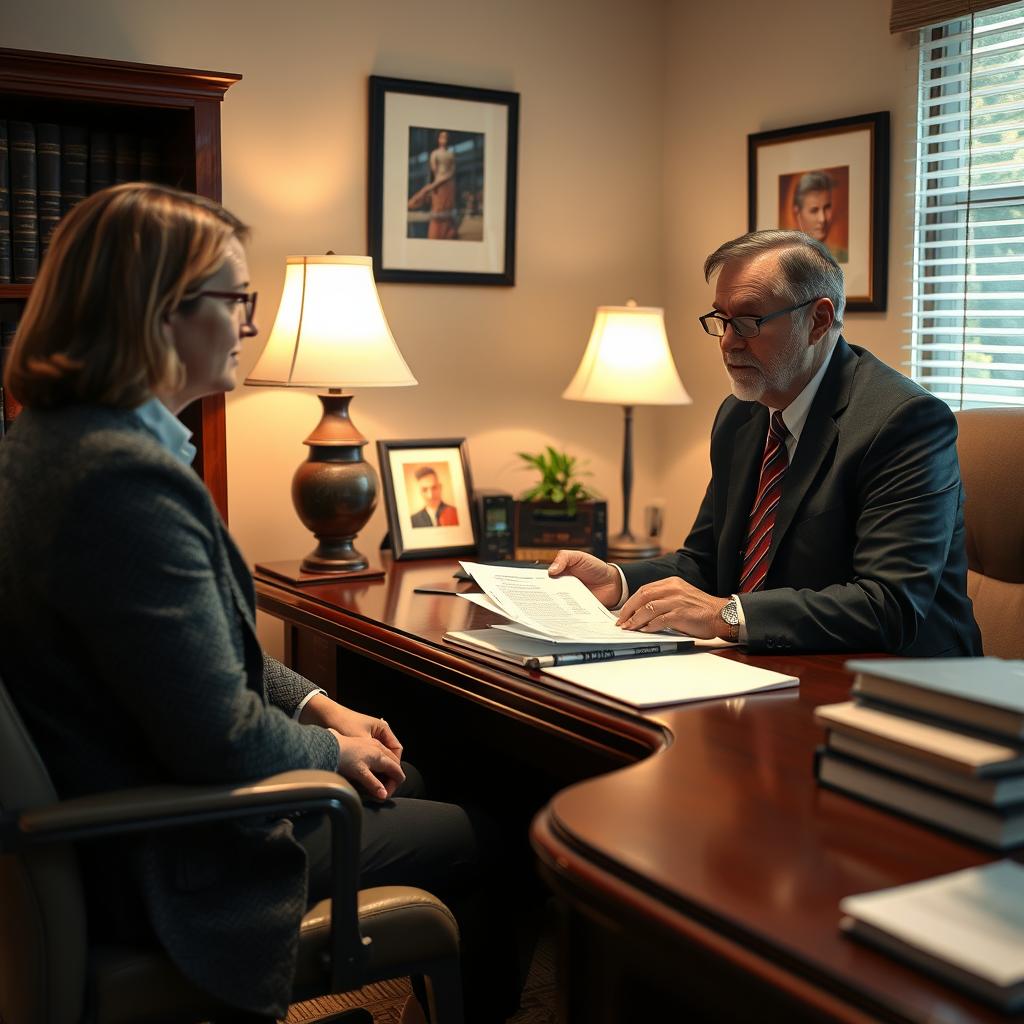
Establishing a special needs trust requires careful attention to both state trust law and the intricate rules governing SSI, Medicaid, and other federal benefit programs. Mr. Sris and his Of Counsel begin by working with the family to clarify the beneficiary’s current and anticipated needs, the source and amount of assets to fund the trust, and the family’s preferences regarding trustee selection. The trust instrument must be drafted to comply with Virginia’s statutory requirements for trust creation while also satisfying federal rules that permit the trust assets to be treated as unavailable for benefit-eligibility purposes. Common funding sources include gifts from parents or grandparents, proceeds from a personal injury settlement, or an inheritance that would otherwise be paid directly to the beneficiary and disrupt benefit eligibility.
Once the trust is established, ongoing administration requires recordkeeping discipline. The trustee—whether a family member, a professional fiduciary, or a combination—must ensure that distributions are made only for permissible supplemental needs and are never paid directly to the beneficiary in cash. Mr. Sris and his Of Counsel advise trustees on distribution protocols, tax filing obligations, and compliance with Virginia trust accounting requirements. When a special needs trust is structured as a third-party trust (funded by someone other than the beneficiary), the terms can be tailored to the grantor’s wishes, including provisions for remainder beneficiaries after the primary beneficiary’s death. First-party special needs trusts, funded with the beneficiary’s own assets, are subject to additional federal requirements, including a Medicaid payback provision. Each family’s situation calls for tailored analysis rather than a one-size-fits-all approach.
About Mr. Sris and His Of Counsel Team
Mr. Sris, Owner and Founder of Law Offices Of SRIS, P.C., has practiced law since 1997. A former prosecutor, he brings decades of experience to trust and estate planning matters, including special needs trust formation and administration. Mr. Sris is admitted to practice in Virginia, Maryland, the District of Columbia, New Jersey, and New York. His background in accounting and information systems informs his work on trust structures involving financial assets and tax-sensitive planning. Mr. Sris testified before the Virginia House Courts of Justice Committee in support of 2019 HB 635 (chief patron Del. David Bulova). He maintains a limited personal caseload to ensure direct involvement in matters requiring advanced planning.
Mr. Sris and his Of Counsel bring over 120 years of combined legal experience. The Of Counsel team includes attorneys with backgrounds spanning prosecution, law enforcement, child welfare, and international practice, providing perspective across the range of legal issues that may intersect with special needs planning—including family law considerations, guardianship and conservatorship proceedings, and estate administration. The firm’s Fairfax Location at 4008 Williamsburg Court, Fairfax, VA 22032, serves families throughout Stafford County and Northern Virginia. Mr. Sris and his Of Counsel have documented 4,739+ case results across all practice areas since 1997. Results may vary; prior outcomes do not guarantee a similar result.
Frequently Asked Questions
What is a special needs trust and how does it work in Virginia?
A special needs trust is a legal arrangement that holds assets for the benefit of a person with a disability while preserving that person’s eligibility for government benefits such as SSI and Medicaid. Under Virginia law, the trust is governed by the Virginia Uniform Trust Code (Va. Code § 64.2-700 et seq.). The trustee manages the trust assets and makes distributions for supplemental needs—items and services that government benefits do not cover—rather than for basic support. Because the beneficiary never directly controls the trust assets, the funds are generally not counted as available resources for benefit-eligibility purposes. To discuss whether a special needs trust is appropriate for your family, reach Law Offices Of SRIS, P.C., at (888) 437-7747.
Do I need a lawyer to create a special needs trust in Stafford County?
While Virginia law does not categorically require an attorney to create a trust, special needs trusts involve compliance with both state trust law and complex federal benefit regulations. A drafting error—such as including language that gives the beneficiary direct access to trust funds or fails to include a required Medicaid payback provision in a first-party trust—can result in the loss of benefits and a requirement to reimburse the government. The Stafford County Circuit Court has authority over trust-related proceedings, and families benefit from working with counsel familiar with local court practice. For guidance on your specific situation, reach Law Offices Of SRIS, P.C., at (888) 437-7747.
How does a special needs trust protect government benefits?
A properly drafted special needs trust protects government benefits by ensuring the trust assets are not treated as countable resources under SSI and Medicaid rules. The trust gives the trustee discretion to make distributions for supplemental needs without requiring distributions for food, shelter, or other basic support that government benefits are intended to provide. The beneficiary cannot demand distributions, sell the trust interest, or use trust assets as collateral. Federal law recognizes two primary categories: third-party special needs trusts, funded by someone other than the beneficiary, and first-party trusts, funded with the beneficiary’s own assets. Each category carries distinct regulatory requirements that must be satisfied for the trust to achieve its protective purpose.
Can a family member serve as trustee of a special needs trust in Virginia?
Yes, Virginia law permits a family member to serve as trustee of a special needs trust. Many families in Stafford County choose a parent or sibling as the initial trustee, often with a professional or corporate successor trustee named to assume responsibility if the family trustee becomes unable to serve. The trustee must understand the rules governing permissible distributions—distributions for food, shelter, or cash given directly to the beneficiary can reduce or eliminate SSI benefits. Mr. Sris and his Of Counsel advise families on trustee selection and provide guidance to trustees on distribution practices and recordkeeping requirements under Virginia trust law.
What assets can fund a special needs trust?
A special needs trust can be funded with a variety of assets, including cash, securities, real property, life insurance proceeds, and personal injury or settlement awards. For third-party trusts, parents and grandparents frequently fund the trust through their estate plans, using a will or revocable living trust to direct assets to the special needs trust upon their death. For first-party trusts, the beneficiary’s own assets—such as an inheritance received directly or a lawsuit settlement—are used to fund the trust. Virginia does not impose a state estate tax, and the federal estate tax exemption is set at a level that affects few families, so tax considerations rarely drive the funding decision for special needs trusts. For a consultation about funding options, reach Mr. Sris and his Of Counsel at (888) 437-7747.
Attorney advertising. Prior results do not guarantee a similar outcome. Results may vary. Case results depend on a variety of factors unique to each case.